Recent Changes in Ontario Slip and Fall Injury Law
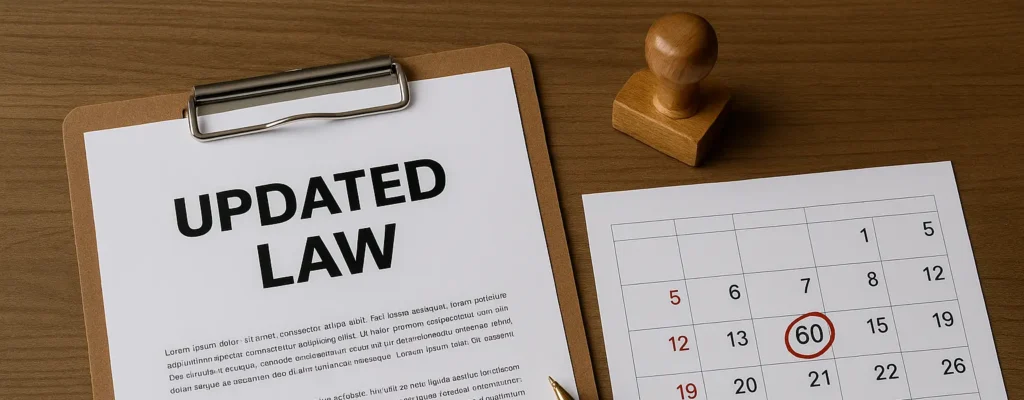
In Ontario, property owners, landlords, businesses, and municipalities all have a legal duty to keep their premises reasonably safe for visitors. This duty arises under the Occupiers’ Liability Act, R.S.O. 1990, c. O.2 [2], which has long served as the foundation of slip and fall law.
But over the past few years, both the legislature and the courts have introduced significant changes. These shifts directly affect how injured victims pursue claims — and how occupiers, landlords, and contractors defend themselves.
This blog explores four key shifts:
- The new 60-day notice rule for snow and ice claims
- The expansion of liability beyond property owners
- The growing role of contributory negligence
- The recognition of long-term and non-economic damages
Each change has major implications for victims seeking compensation and for property owners trying to avoid liability.
The Occupiers’ Liability Act: A Quick Refresher
Section 3(1) of the Act sets out the duty:
“An occupier of premises owes a duty to take such care as in all the circumstances of the case is reasonable to see that persons entering on the premises… are reasonably safe while on the premises.” [2]
This duty applies broadly to:
-
Private property owners (homeowners, landlords, businesses)
-
Public occupiers (municipalities maintaining sidewalks, parks, public spaces)
-
Contracted parties (snow removal or maintenance companies)
Failure to meet this standard can result in liability if someone suffers an injury on the property. What has changed in recent years is how Ontario courts and lawmakers interpret and apply this duty.
Related Resource: Slip and Fall Injury
Shift 1: The New 60-Day Notice Period for Snow and Ice Accidents
Old Rule vs. New Rule
For decades, slip and fall victims had a two-year limitation period to provide notice and start a claim. That changed on January 29, 2021, when Bill 118 came into force. Now, victims of snow- and ice-related accidents must provide written notice within 60 days of the incident [1].
What the Notice Must Contain
The notice must include:
-
The date, time, and location of the fall
-
The injured person’s name and contact information
-
Delivery to at least one responsible party — occupier, owner, or snow contractor
Courts have accepted that an email may qualify, but lawyers strongly recommend a signed letter by registered mail to avoid disputes.
Consequences of Missing the Deadline
Failure to provide notice within 60 days can bar the claim entirely, unless the plaintiff shows:
-
A reasonable excuse for the delay (e.g., hospitalization, incapacity)
-
That the defendant was not prejudiced by the late notice
Case Example: In Chiocchio v. City of Hamilton (2021 ONSC 3835), the plaintiff slipped on ice but missed the strict municipal deadline. The court allowed the claim to proceed because she was under medical treatment and the city could not prove prejudice [3].
Practical Takeaways
-
For victims: Seek legal help immediately after a winter fall. Sixty days disappears quickly when recovering from injuries. Preserve evidence (photos, footwear, medical records) to support your claim.
-
For property owners: Keep maintenance logs and incident reports. If late notice is excused, these records become critical in showing that you acted reasonably.
Related Blog: Ontario’s 60-Day Rule for Slip and Falls Explained
Shift 2: Expanding Liability Beyond Property Owners
The Old Assumption
Historically, slip and fall liability focused almost exclusively on property owners. If you fell outside a store, the store was sued. If you slipped in an apartment building, the landlord was sued.
The New Reality
Ontario courts increasingly recognize that liability can extend to multiple parties, especially where contracts or leases divide responsibilities.
-
Contractors → In Cairns v. Toronto Catholic District School Board (2019 ONSC 4231), a snow removal contractor was found partly liable after failing to salt icy pavement, despite being hired by the school board [4].
-
Landlords & Tenants → Courts now review leases carefully. If both landlord and tenant share maintenance duties, both may face liability.
-
Municipalities → Cities can also be liable if winter maintenance fails to meet statutory standards, though these cases require proof of gross negligence under the Municipal Act, 2001 [5].
Why This Matters
-
For victims: Casting a wider net of defendants may be necessary to ensure full recovery. Suing the owner alone could leave money on the table if a contractor or tenant also shares blame.
-
For occupiers: It underscores the need for clear contracts and indemnity clauses with snow removal companies and tenants.
Practical Takeaways
-
For victims: Work with a lawyer to identify all potentially responsible parties early. This prevents missed claims and maximizes compensation.
-
For property owners: Don’t assume your contractor or tenant shields you from liability. Courts may hold everyone responsible if duties overlap.
Related Resource: Occupiers’ Liability Act Explained
Shift 3: Contributory Negligence in Slip and Fall Claims
What It Means
Even when a property owner is negligent, Ontario courts increasingly reduce damages if the injured person is found partly responsible for their own fall. This is called contributory negligence.
Examples from Ontario Cases
-
Wearing shoes without traction on icy ground
-
Walking while distracted, such as texting
-
Ignoring posted warning signs
Case Example: In Kirkland v. Ontario Ltd. (2020 ONSC), damages were reduced by 25% because the plaintiff wore inappropriate footwear despite knowing conditions were icy [6].
How Courts Calculate Fault
Judges apportion liability as a percentage. If total damages are $100,000 and the victim is 25% responsible, the award is reduced to $75,000.
Practical Takeaways
-
For victims: Preserve footwear and clothing as evidence. Witnesses and photos can show you took reasonable precautions.
-
For property owners: While contributory negligence can reduce damages, it rarely eliminates liability. Good record-keeping remains essential.
Related Blog: How Negligence Shapes Personal Injury Claims
Shift 4: Recognizing Long-Term & Non-Economic Damages
Beyond Broken Bones
Ontario courts now recognize that slip and fall injuries often extend beyond immediate fractures. Compensation increasingly covers:
-
Chronic pain syndromes that limit mobility
-
Psychological impacts, such as PTSD, anxiety, or depression
-
Loss of enjoyment of life, including hobbies, work, and daily routines
Case Example: In MacLeod v. Lambton (2021 ONSC), the plaintiff successfully claimed damages for both chronic pain and depression resulting from a fall, highlighting the court’s recognition of non-economic harm [7].
Why This Matters
-
For victims: Claims can and should reflect the long-term consequences of injuries, not just immediate medical costs.
-
For property owners: It increases potential exposure. A single fall could lead to a six-figure award if lifelong care or psychological treatment is required.
Practical Takeaways
-
For victims: Seek both medical and psychological evaluations. Documentation of long-term impact strengthens your case.
-
For property owners: Recognize that liability may include damages for chronic or invisible injuries. Proactive maintenance is the best protection.
Related Service: Serious Injury
Case Commentary: How These Shifts Play Out
Case Study:
A Mississauga resident slipped on untreated ice outside a condo in 2022. She provided written notice within 60 days, as required by Bill 118. The investigation revealed overlapping duties:
-
The condo corporation
-
The property management company
-
The snow removal contractor
The court held all three defendants liable, apportioning damages based on their roles.
Lesson: Victims must act quickly, while property owners must maintain clear contracts and thorough logs.
❓ FAQs: Occupiers’ Liability in Ontario
-
Does the 60-day rule apply to all slip and falls?
No, only to snow and ice accidents. Other accidents still follow the two-year limitation. -
Can multiple parties be liable?
Yes. Owners, landlords, tenants, contractors, and municipalities may all share responsibility. -
What if I missed the 60-day deadline?
Courts may excuse late notice if there was a reasonable excuse and no prejudice to the defendant. -
Do businesses owe the same duty as homeowners?
Yes, but commercial occupiers are held to a higher standard of care. -
What is “gross negligence”?
It’s more than carelessness — it’s a serious disregard for safety. Plaintiffs must prove gross negligence in municipal cases. -
Can I sue if my fall happened in a rental apartment?
Yes. Landlords and property managers are responsible for common areas.
Related Page: FAQs
Disclaimer
This blog is for informational purposes only and does not constitute legal advice. Please consult a lawyer about your specific case.
Author: Written by the Personal Injury Lawyers at Cambria Law Firm, serving Mississauga, Hamilton, Guelph, and clients across Ontario.
Visit our Slip and Fall Injury Lawyer page to learn more about how we can protect your right to compensation.
Sources
[1] Bill 118, An Act to amend the Occupiers’ Liability Act (2021). Retrieved from: https://www.ola.org/en/legislative-business/bills/parliament-42/session-1/bill-118
[2] Occupiers’ Liability Act, R.S.O. 1990, c. O.2. Government of Ontario. Retrieved from: https://www.ontario.ca/laws/statute/90o02
[3] Chiocchio v. City of Hamilton, 2021 ONSC 3835
[4] Cairns v. Toronto Catholic District School Board, 2019 ONSC 4231
[5] Municipal Act, 2001, S.O. 2001, c. 25. Government of Ontario. Retrieved from: https://www.ontario.ca/laws/statute/01m25
[6] Kirkland v. Ontario Ltd., 2020 ONSC
[7] MacLeod v. Lambton, 2021 ONSC
Client Testimonials
Professional Representation and Support