Injured in Ontario? Get clear legal guidance today.
Our personal injury team can help with accident, disability, and injury claims. Contact us today for a no-obligation consultation.

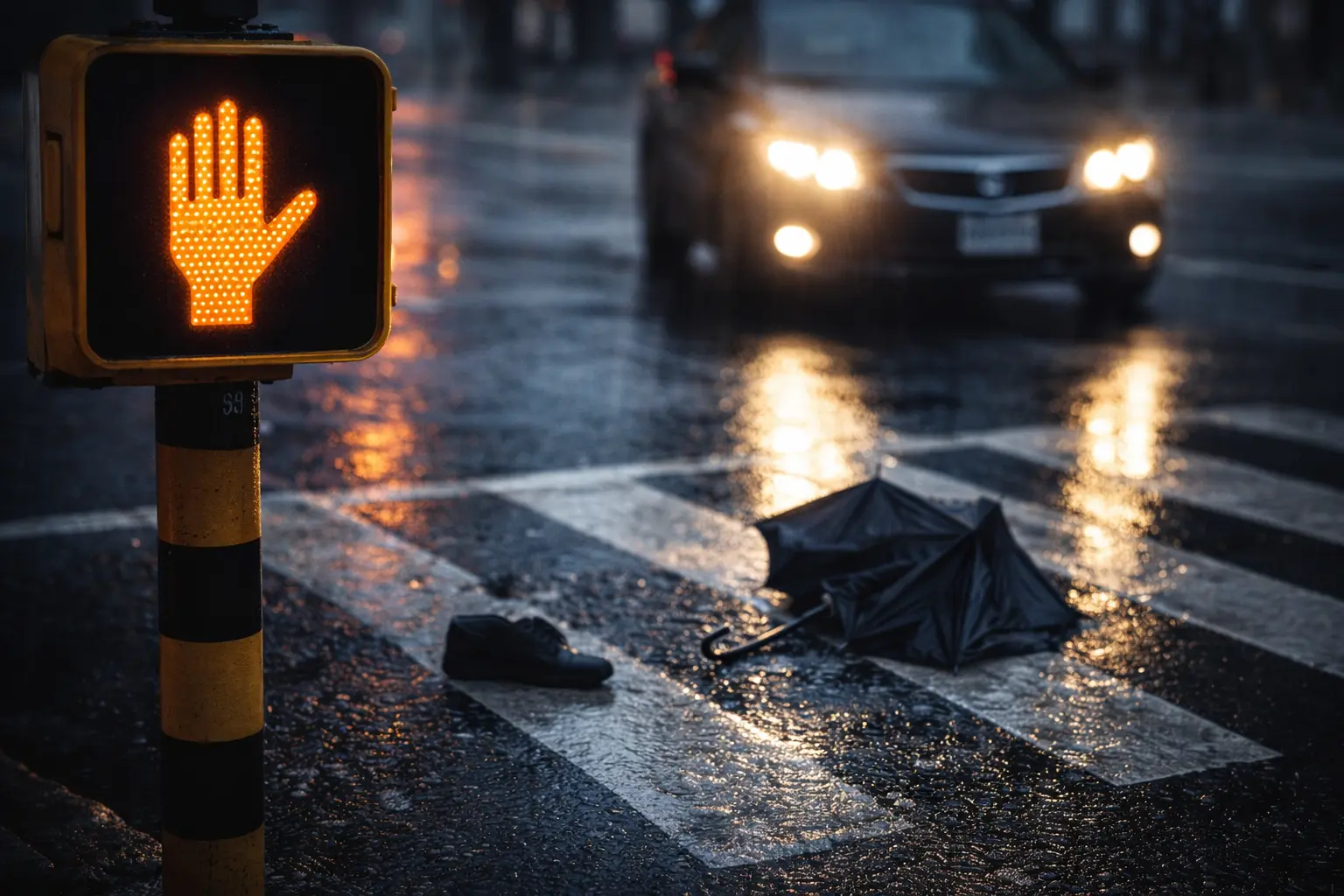
If you are a pedestrian hit by a car in Ontario, you are entitled to compensation through two main avenues, even if you do not own a vehicle or carry auto insurance. First, you can claim Statutory Accident Benefits (SABS) through the at-fault driver’s insurance (or a provincial fund) to cover immediate medical, rehabilitation, and attendant care costs. Second, you can file a tort claim against the at-fault driver to recover damages for pain and suffering, future care costs, and income loss that exceeds what no-fault benefits provide.
Summary:
You Don’t Need Auto Insurance: Injured pedestrians access SABS through the insurance policy of the vehicle that hit them.
The “Reverse Onus” Rule: Under Section 193 of the Highway Traffic Act, the driver who hits a pedestrian is presumed negligent. They must prove they were not at fault; you do not have to prove they were.
The 2026 SABS Catch: Starting July 1, 2026, unrelated pedestrians will no longer have access to a driver’s optional benefits (like income replacement), making the tort lawsuit critical for recovering lost wages.
Two Paths to Compensation: You can claim no-fault benefits (SABS) immediately and simultaneously sue the at-fault driver for pain and suffering and larger financial losses.
Many pedestrians struck by vehicles assume that because they have no auto insurance of their own, they have no access to the no-fault benefits designed to support injured Ontarians. That assumption is wrong—and it costs some victims thousands of dollars in pedestrian accident Ontario compensation they never claimed.
Under Ontario’s no-fault insurance system, Statutory Accident Benefits (SABS) are available to everyone involved in a [car accident]—including pedestrians, cyclists, and passengers who do not own a car.
As a pedestrian struck by a vehicle, you access SABS through the insurer of the vehicle that hit you. You file your accident benefits claim directly with their insurer. If the driver was uninsured or fled the scene (a hit-and-run), you can access benefits through the Motor Vehicle Accident Claims Fund (MVACF), a provincial safety net specifically designed to protect victims.
SABS benefits available to an injured pedestrian generally include:
Medical and rehabilitation benefits: Covering treatment not paid by OHIP, including physiotherapy, chiropractic care, psychological counselling, and assistive devices.
Attendant care benefits: Support if your injuries require personal care assistance.
Income replacement benefits: Replacing a portion of your income if injuries prevent you from working.
Non-earner benefits: Provided if you are not employed but suffer a complete inability to carry on a normal life.
Housekeeping and home maintenance: Covering the cost of services you can no longer perform.
Important 2026 Note: Under Ontario’s July 1, [2026 SABS changes], benefits like income replacement, non-earner, and housekeeping are becoming optional. Crucially, the new rules state that even if the at-fault driver purchased these optional benefits, they will only apply to their own household (named insured, spouse, dependents, listed drivers). As an unrelated pedestrian, you will only have access to the mandatory medical, rehabilitation, and attendant care benefits through their policy, making a tort claim even more vital for recovering lost wages.
One of the most powerful legal protections for pedestrians in Ontario is found in Section 193 of the Highway Traffic Act.
In a standard personal injury case, the injured person bears the burden of proof. You must demonstrate that the other party was negligent. Section 193 reverses that burden when a motor vehicle strikes a pedestrian on a public road. Instead of you having to prove the driver was at fault, the driver must prove they were not negligent. The law presumes the vehicle operator bears responsibility for the collision.
This reverse onus is a massive legal advantage. In common pedestrian scenarios—a vehicle turning left through a crosswalk, failing to stop at a crossing, or reversing into a pedestrian—the driver must affirmatively demonstrate they exercised reasonable care. If they cannot, they are liable.
(Note: The reverse onus does not eliminate contributory negligence. If evidence shows the pedestrian crossed against a light or stepped out without looking, damages may be reduced proportionally. However, the starting position in Ontario law clearly favours the pedestrian.)
In addition to SABS, you have the right to sue the at-fault driver through the tort system for damages that go beyond what your no-fault benefits cover.
A tort claim allows you to seek compensation for:
Pain and suffering (non-pecuniary general damages).
Income loss beyond SABS limits (especially critical after the 2026 SABS changes take effect).
Future loss of income if your injuries permanently affect your ability to work.
Future care costs for medical treatment, therapies, and accommodations you will need going forward.
Loss of housekeeping capacity beyond what benefits provided.
Family Law Act claims for close family members who suffered loss of care, guidance, and companionship.
Be aware that Ontario’s [tort deductible of $47,913.01] (the 2026 figure) applies to pain and suffering awards below $156,715.16. However, for serious pedestrian injuries—which frequently result in fractures, head trauma, and long-term mobility impairment—this deductible is often not a barrier, as awards regularly exceed the threshold.
Pedestrian accidents are among the most severe personal injury cases in Ontario. When a vehicle travelling at 40 to 60 km/h strikes an unprotected person, the resulting injuries are often catastrophic—traumatic brain injuries, spinal cord damage, multiple fractures, internal organ injuries, and permanent disability.
At Cambria Law Firm, we have recovered over one million dollars in pedestrian accident settlements for our clients. These results reflect cases where serious, permanent injuries were carefully documented, the full extent of future losses was properly quantified, and the claim was structured to achieve maximum recovery across both the SABS and tort streams.
At the scene (if you are physically able):
Call 911 immediately; a police report creates the official record of the collision.
Do not move if seriously injured; wait for emergency services.
Photograph the scene: vehicle position, road conditions, crosswalk markings, traffic signals, and your injuries.
Get the driver’s name, plate number, and insurance information.
Collect witness names and phone numbers.
In the hours and days after:
Go to the emergency room, even if you feel relatively well. Adrenaline masks serious injuries.
Notify the driver’s insurer to initiate your accident benefits claim. You have 30 days to submit the formal application.
Contact a personal injury lawyer before giving any recorded statements to any insurer.
[Pedestrian accident] claims in Ontario require a precise understanding of both the no-fault benefits system and the tort process. The reverse onus provisions, the strict SABS application deadlines, and the strategic decisions around how to document and present serious injuries all require experienced legal guidance.
Cambria Law has recovered over one million dollars for pedestrian accident victims in Ontario. Nav and the team are ready to fight for everything you are entitled to.
Call us at 416-840-7545 or contact us online for a free consultation. No fees unless we win.
Our personal injury team can help with accident, disability, and injury claims. Contact us today for a no-obligation consultation.