Injured in Ontario? Get clear legal guidance today.
Our personal injury team can help with accident, disability, and injury claims. Contact us today for a free consultation.

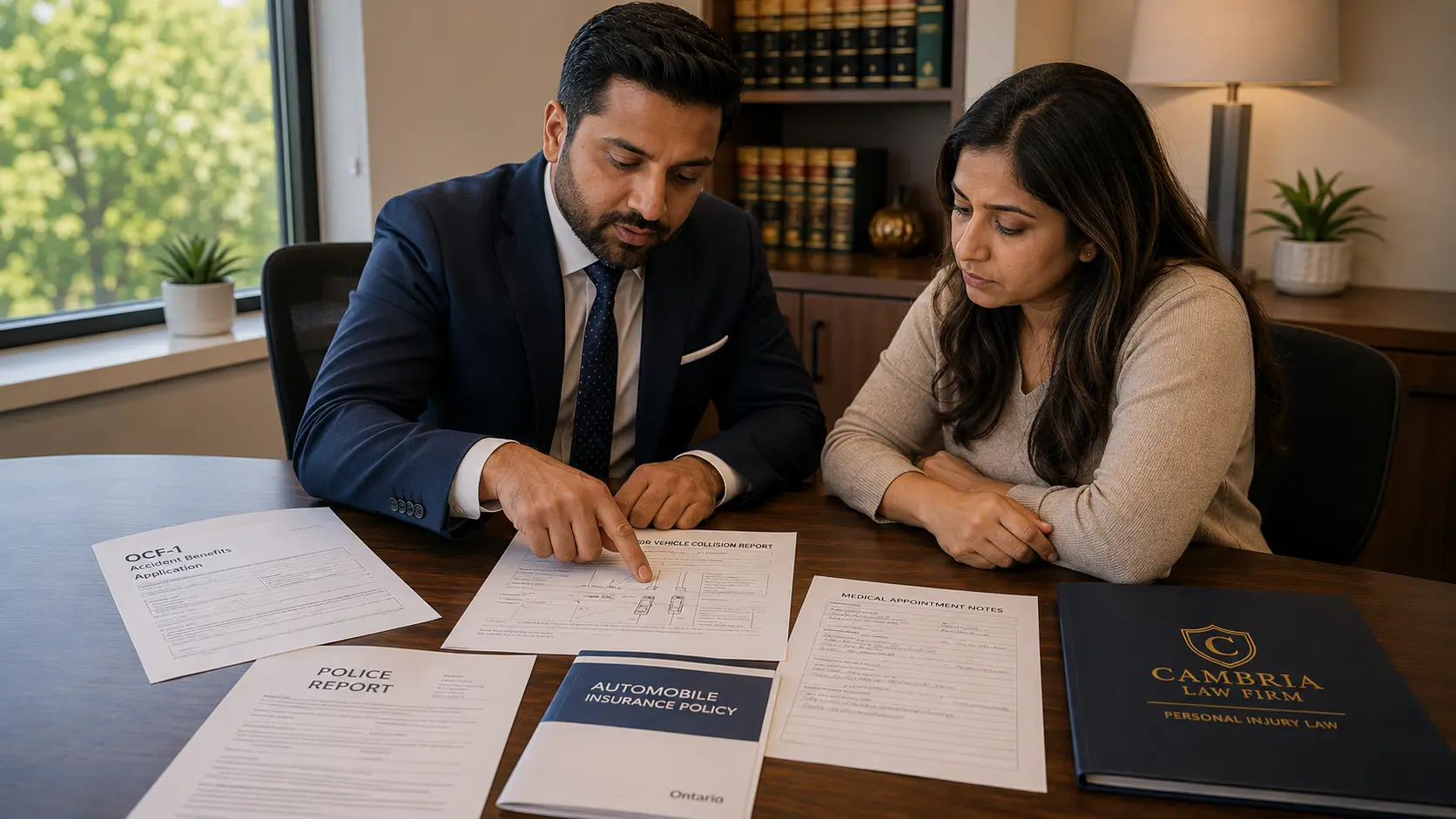
Being hit by an impaired driver raises two separate legal questions: what happens to the driver in criminal court, and how do you obtain compensation for your injuries and losses?
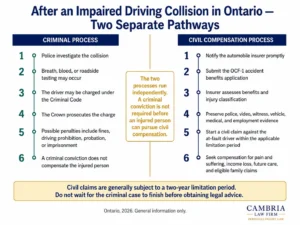
Criminal and civil proceedings are separate. A criminal conviction does not compensate an injured person, and a civil claim does not necessarily depend on a conviction. Compensation may be available through Ontario accident benefits and a civil claim against the at-fault driver.
Most people who are hit by an impaired driver in Mississauga or the Greater Toronto Area first focus on what is happening to the other driver. Was the driver charged? Will the driver lose their licence? Could the driver go to jail?
Those are legitimate questions. But they are not the most urgent questions when you are dealing with injuries, medical appointments, lost income, and mounting expenses.
Criminal proceedings deal with punishment. A civil claim deals with compensation. The two processes run separately, answer different questions, and apply different legal standards.
You do not need a criminal conviction before pursuing compensation from the driver who caused the collision.
When an impaired driver causes a collision in Mississauga, two separate legal processes may follow.
The criminal process involves the Crown prosecuting the driver under the Criminal Code. Charges may include impaired operation, operating a vehicle with a blood alcohol concentration above the legal limit, or refusing to comply with a lawful breath demand.
The criminal case determines whether the driver committed an offence and what penalty should be imposed. Possible penalties include fines, driving prohibitions, probation, or imprisonment.
The civil process involves the injured person seeking compensation from the at-fault driver and, in most cases, the driver’s automobile insurer.
The civil claim focuses on what the collision cost you, including medical expenses, lost income, pain and suffering, future care needs, and the long-term effect on your life.
A civil claim does not depend on a criminal conviction. You may still pursue compensation if the driver was not charged, if charges were withdrawn, or if the driver was acquitted.
The reason is that criminal and civil cases use different standards of proof. Criminal guilt must be proven beyond a reasonable doubt. Civil liability is decided on a balance of probabilities, meaning it must be shown that the claim is more likely true than not.
Ontario operates a no-fault accident benefits system under the Statutory Accident Benefits Schedule, commonly called the SABS.
This means that after a motor vehicle collision, including one caused by an impaired driver, you may apply for certain benefits through your own automobile insurer regardless of who caused the crash.
Accident benefits may include:
The amount of coverage depends on the injury classification, the applicable SABS rules, optional benefits, policy endorsements, and the date the policy was issued or renewed.
Accident benefits are often the first source of financial support after a collision, but they may not fully compensate someone with serious or permanent injuries. They are a starting point, not necessarily the full value of the claim.
Separate from accident benefits, you may bring a civil lawsuit against the at-fault driver. This is commonly called a tort claim.
A tort claim may provide compensation beyond the benefits available through your own insurer.
If your injuries meet Ontario’s legal threshold, you may seek compensation for pain, suffering, loss of enjoyment of life, and the permanent effect of the injuries.
Ontario applies a statutory deductible to certain non-pecuniary damage awards below a prescribed threshold. For 2026, the general deductible is $47,913.01. The amount and whether it applies depend on the final award and the applicable statutory rules.
You may claim compensation for income lost because of the collision, as well as future income loss or reduced earning capacity if the injuries affect your long-term ability to work.
If the injuries require ongoing treatment, rehabilitation, equipment, medication, home assistance, or personal support, those future costs may form part of the civil claim.
Recoverable expenses may include prescription costs, transportation to medical appointments, home modifications, mobility aids, and other reasonable expenses caused by the collision.
Eligible family members may have their own claim under Ontario’s Family Law Act for loss of care, guidance, and companionship when a person suffers serious injury or dies.
One common misconception is that the impaired driver’s insurer will automatically refuse to compensate the injured person.
Ontario law generally protects innocent third parties. Minimum third-party liability coverage may remain available even when the at-fault driver breached a policy condition by driving while impaired.
The insurer may later seek repayment from its own insured driver, but that dispute does not necessarily eliminate the injured person’s access to minimum liability coverage.
Coverage issues can still arise, especially when the injuries are serious and the at-fault driver has only minimum liability limits.
If your own policy includes the OPCF 44R Family Protection Endorsement, it may provide additional coverage when the at-fault driver’s insurance is insufficient.
Your own policy may provide uninsured or underinsured automobile protection when the at-fault driver has no insurance or inadequate coverage.
If no automobile insurer is available, Ontario’s Motor Vehicle Accident Claims Fund may provide limited last-resort compensation, subject to eligibility requirements and statutory limits.
Identifying all available insurance coverage early is important because the available limits often shape the realistic value and strategy of the claim.
A criminal conviction is not required, but evidence of impairment may significantly strengthen the civil case.
Relevant evidence may include:
In Mississauga, collisions on Highway 401, Hurontario Street, Dixie Road, Eglinton Avenue West, and other major routes may involve dashcam footage or recordings from nearby commercial properties.
Evidence collection is time-sensitive. Surveillance recordings may be overwritten within days, vehicle data may be lost, and witnesses’ memories fade. Early legal action improves the chance of preserving important evidence.
Ontario’s accident benefits rules change on July 1, 2026. For a new automobile policy purchased on or after that date, medical, rehabilitation, and attendant care benefits remain mandatory. Other accident benefits, including income replacement, caregiver, housekeeping, and home-maintenance benefits, become optional.
The position may be different for a policy renewed on or after July 1, 2026. Existing benefits may continue unless the insured and insurer agree in writing to decline or change them.
The actual policy, renewal documents, endorsements, accident date, and coverage elections must therefore be reviewed before determining which benefits are available.
If income replacement coverage was not included and an injury prevents the claimant from working, the civil claim against the at-fault driver may become particularly important for recovering past and future income loss.
Medical, rehabilitation, and attendant care coverage remains mandatory under the reformed framework. The applicable limits and injury classification still depend on the policy, the SABS, and the medical evidence.
If the insurer denies a benefit or disputes the injury classification, accident benefits disputes are generally brought before the Licence Appeal Tribunal. The civil tort claim proceeds separately through the Ontario courts.
Ontario limitation periods and insurance deadlines do not stop while a criminal case proceeds.
| Deadline | Action |
|---|---|
| Promptly after the collision | Notify your automobile insurer and report the claim. |
| Generally within 30 days of receiving the forms | Complete and return the OCF-1 Application for Accident Benefits. |
| Generally within 2 years | Start the civil lawsuit against the at-fault driver, subject to discoverability and other legal rules. |
Missing a limitation period can permanently affect the right to pursue compensation. Do not wait for the criminal case to finish before obtaining advice about the civil claim.
How Cambria Law Firm Handles Impaired Driving Civil Claims
Yes. A civil claim uses the balance-of-probabilities standard, which is lower than the criminal standard of proof beyond a reasonable doubt. The absence of charges, a withdrawal of charges, or an acquittal does not automatically prevent a civil claim.
In many cases, minimum liability coverage remains available to compensate an innocent injured third party even when the at-fault driver breached a policy condition. The insurer may have separate rights against its own insured driver.
Your own OPCF 44R Family Protection Endorsement or uninsured and underinsured automobile coverage may provide additional compensation. The policy wording and available limits must be reviewed.
Ontario applies a statutory deductible to certain non-pecuniary general damage awards below a prescribed monetary threshold. For 2026, the general deductible is $47,913.01. Whether it applies depends on the amount of the award and the applicable statutory rules.
The general limitation period is two years, although discoverability and other rules may affect when the period begins. Insurance forms and accident benefits disputes may have different deadlines.
No. Accident benefits, evidence preservation, insurer communication, and the civil lawsuit can proceed while the criminal case is ongoing.
Personal injury claims may be handled on a contingency basis, meaning the legal fee is paid from compensation recovered. The applicable percentage, disbursements, taxes, and other terms are explained in the written retainer agreement.
Our personal injury team can help with accident, disability, and injury claims. Contact us today for a free consultation.